Honeycomb was built for the AI era. Learn how to futureproof your software for what comes next.
Discover why Honeycomb is the better choice for your engineers, your customers, and your bottom line.
Start your journey with the definitive guide to observability. Download our complimentary ebook.
Bring observability to every software engineer.
Learn about our company, mission and values.
Come for the impact, stay for the culture.
See Honeycomb's latest press releases, media, and more
Learn more about becoming a Honeycomb partner.
Already a Honeycomb customer?
Phillip Carter
I’m Phillip, a product manager here at Honeycomb. After eleven-ish months of working on our product, I totally understand observability, right? …Kinda? Sorta? Maybe? I’m not sure—but, I have been sitting in this space…
Charity Majors
The book is done. The book is FINISHED. There will be no more writing of the book! Holy macaroni. If you think you might be sensing just a SMIDGE of relief, you wouldn’t be…
Josh Levin
Any significant shift in an organization’s software engineering culture has the potential to feel tectonic, and observability (o11y for short)—or more specifically, Observability Driven Development—is no different. Leaning into observability, which calls for tool-enhanced…
Pete Hodgson
It’s harder to understand and operate production systems in 2021 than it was in 2001. Why is that? Shouldn’t we have gotten better at this in the past two decades? There are valid reasons…
Two years ago, I wrote a long retrospective of observability for its third anniversary. It includes a history of instrumentation and telemetry, a detailed explanation of the technical spec, and why the whole “three pillars” thing…
Alex Vondrak
Honeycomb is known for its incredibly fast performance: you can sift through billions of rows, comparing high-cardinality data across thousands of fields, and get fast answers to your queries. And none of that is…
Fred Hebert
This is my first week here as the first dedicated SRE for Honeycomb, and in a welcoming gesture, I was asked if I wanted to write a blog post about my first impressions and…
For most teams, operations engineering is more necessary than ever. Honeycomb CTO Charity Majors describes what that work looks like for modern software teams, and the new responsibilities involved.
The most successful software development movement of my lifetime is probably test-driven development or TDD. With TDD, requirements are turned into very specific test cases, then the code is improved so the tests pass….
Christine Yen
When Charity and I started pitching Honeycomb, we had a “bit” we would do, on the importance of building for teams: I’d identify her as the {Kafka, Mongo, insert tech-of-the-moment here} expert on the…
Danyel Fisher
A few months ago, Honeycomb released our SLO — Service Level Objective — feature to the world. We’ve written before about how to use it and some of the use scenarios. Today, I’d like…
“Sociotechnical” I learned this word from Liz Fong-Jones recently, and it immediately entered my daily lexicon. You know exactly what it means as soon as you hear it, and then you wonder how you…
Get it delivered straight to your inbox.
By subscribing to our newsletter, you agree to Honeycomb’s Terms of Service and Privacy Notice.
(Why it’s so important to look inside your org before you look outside) I am delighted to announce that we have a new VP of engineering: our own Emily Nakashima, formerly director of engineering…
To have Observability is to have the ability to understand your system’s internal state based on signals and externally-visible output. Honeycomb’s approach to Observability is to strive toward this: every feature of the product…
Alyson van Hardenberg
Feature flags are great and serve us in so many ways. However, we do not love long-lived feature flags. They lead to more complicated code, and when we inevitably default them to be true…
I’ve said this before, but I’m saying it again: observability is not a synonym for monitoring, and there are no three pillars. The pillars are bullshit. Briefly: monitoring is how you manage your known-unknowns,…
This year was my third in a row attending (and now speaking at!) Monitorama. Because the organizers do a great job of turning introverts into extroverts for three days straight, it’s always a fun…
Nathan LeClaire
Illuminating the under-loved with Honeycomb Most modern web apps end up sprouting some subset of tasks that happen in the “background”, i.e., when a user is not directly waiting on the request from a…
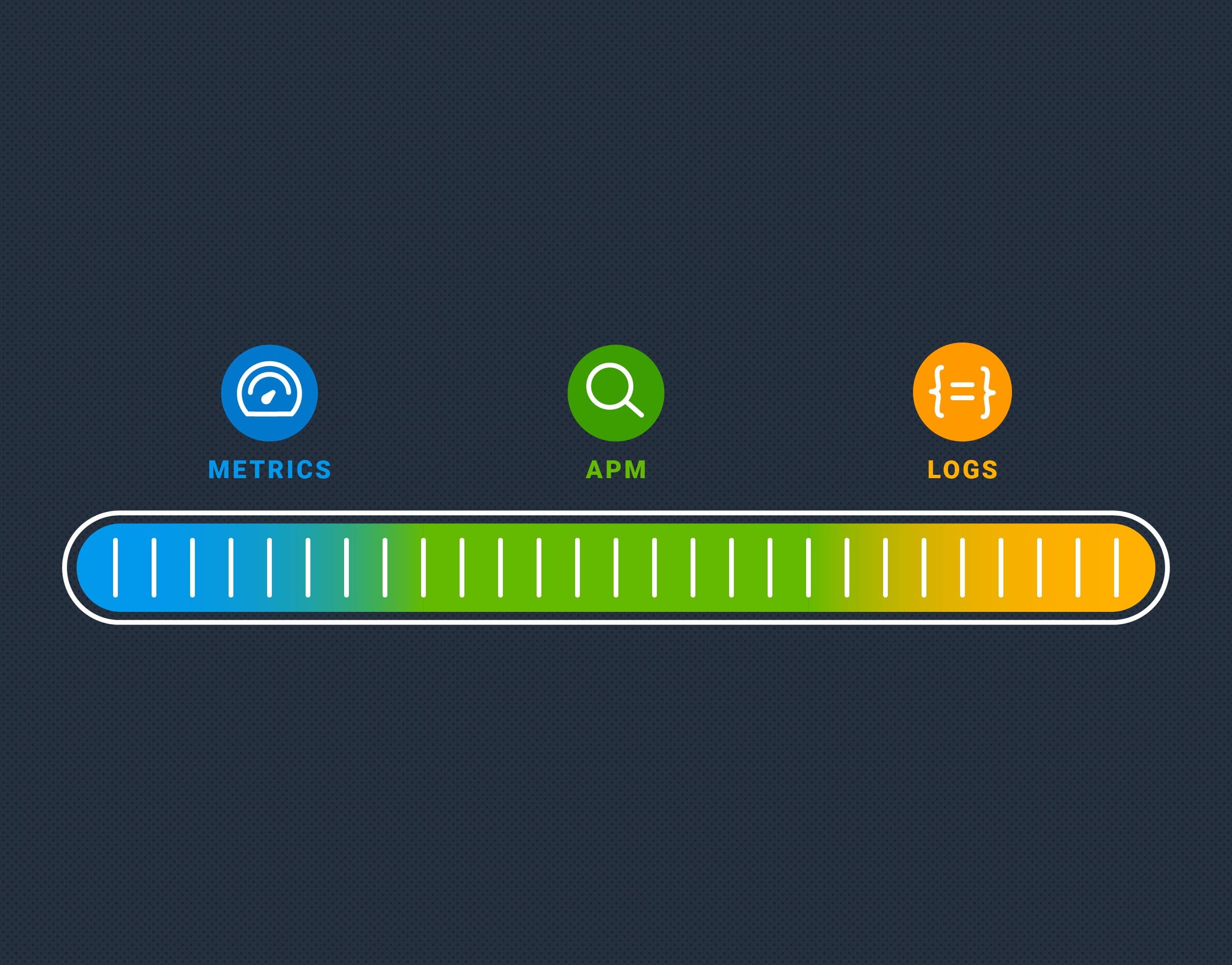
If you’re involved in improving the performance of your application, you’ve probably heard about application performance monitoring (APM), metric analysis, and log management. But you might not understand what they are or the differences…
UPDATE: Charity has written an update on observability spend for 2025 with new figures. Read the two-part blog series here: Part 1: Is your observability a cost or an investment? Part 2: Observability cost…