Honeycomb was built for the AI era. Learn how to futureproof your software for what comes next.
Discover why Honeycomb is the better choice for your engineers, your customers, and your bottom line.
Start your journey with the definitive guide to observability. Download our complimentary ebook.
Bring observability to every software engineer.
Learn about our company, mission and values.
Come for the impact, stay for the culture.
See Honeycomb's latest press releases, media, and more
Learn more about becoming a Honeycomb partner.
Already a Honeycomb customer?
Jessica Kerr (Jessitron)
The Accelerate State of Devops Report highlights four key metrics (known as the DORA metrics, for DevOps Research & Assessment) that distinguish high-performing software organizations: deployment frequency, lead time for changes, time-to-restore1, and change…
Purvi Kanal
Each CWV measures a specific part of the end user experience. CWV scores can help identify gaps in web page performance. Additionally, Google uses CWV scores as one of the measures it uses to rank pages, which means they are important for SEO.
Roel Vista
n technical support, ensuring customer satisfaction and quickly resolving issues are of utmost importance. At Honeycomb, we embrace a comprehensive approach by using our own platform—not only for engineering purposes, but to also empower our support team.
Kyle Moonwright
Insightful proof-of-concepts with a tool can be difficult to undertake due to the demands on valuable resources: time, energy, and people. With a task as grand as observability, how could one truly test if Honeycomb and OpenTelemetry are right for their organization and meet their requirements? For this thought experiment, here’s a comprehensive description of the ideal product evaluation over the course of four weeks, given unlimited resources.
At Honeycomb, we are all about observability. In the past, we have proposed observability-driven development as a way to maximize your observability and supercharge your development process. But I have a problem with the terminology, and it is: I don’t want observability to drive your development.
Martin Thwaites
We saw a shift this year in how the technology sector honed in on sustainability from a cost perspective. In particular, looking at where they’re spending that revenue in the infrastructure and tooling space. Observability tooling comes under a lot of scrutiny as it’s perceived as a large cost center—and one that could be cut without affecting revenue. After all, if the business hasn’t had a problem in the last few months, we mustn’t need monitoring—right?
Nathan Lincoln
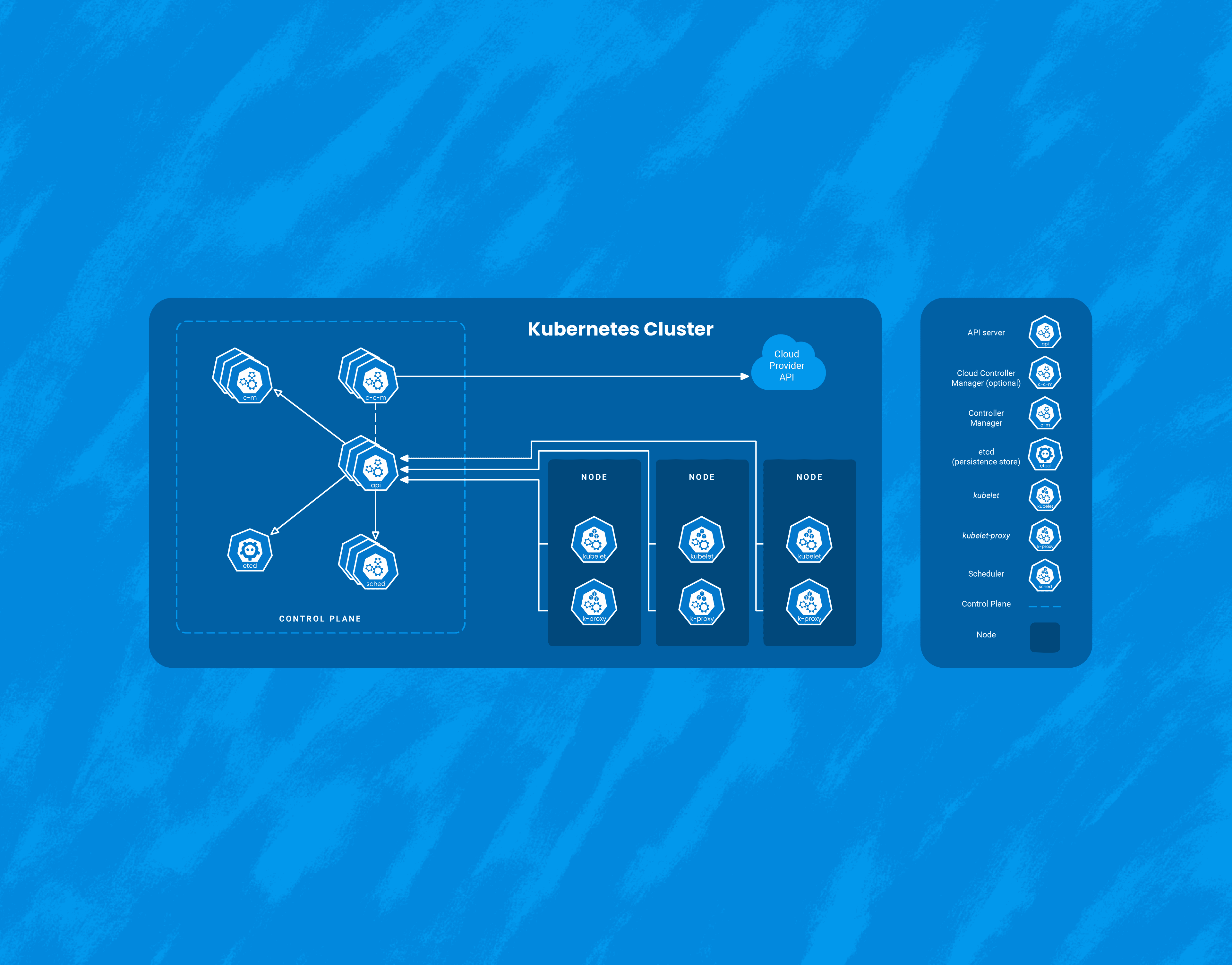
While Kubernetes comes with a number of benefits, it’s yet another piece of infrastructure that needs to be managed. Here, I’ll talk about three interesting ways that Honeycomb uses Honeycomb to get insight into our Kubernetes clusters. It’s worth calling out that we at Honeycomb use Amazon EKS to manage the control plane of our cluster, so this document will focus on monitoring Kubernetes as a consumer of a managed service.
Tyler Wilson
Frontend observability is a tricky problem. No website is free of errors or slowdowns; sites break down in weird ways for all kinds of reasons. Accounting for every possible combination of platform, browser, extensions, and (sometimes baffling) user behavior would be an impossible task. How do we decide which errors are important? One useful framework for making these frontend development decisions is customer-centric observability.
Rebecca Carter
Modern software development—where code is shipped fast and fixed quickly—simply can’t happen without building observability in before deployments happen. Teams need to see inside the code and CI/CD pipelines before anything ships, because finding problems early makes them easier to fix. And don’t take “easier to fix” lightly: incidents found late not only impact the customer experience (and perhaps their loyalty), but they also hit developer productivity and job satisfaction hard.
Rox Williams
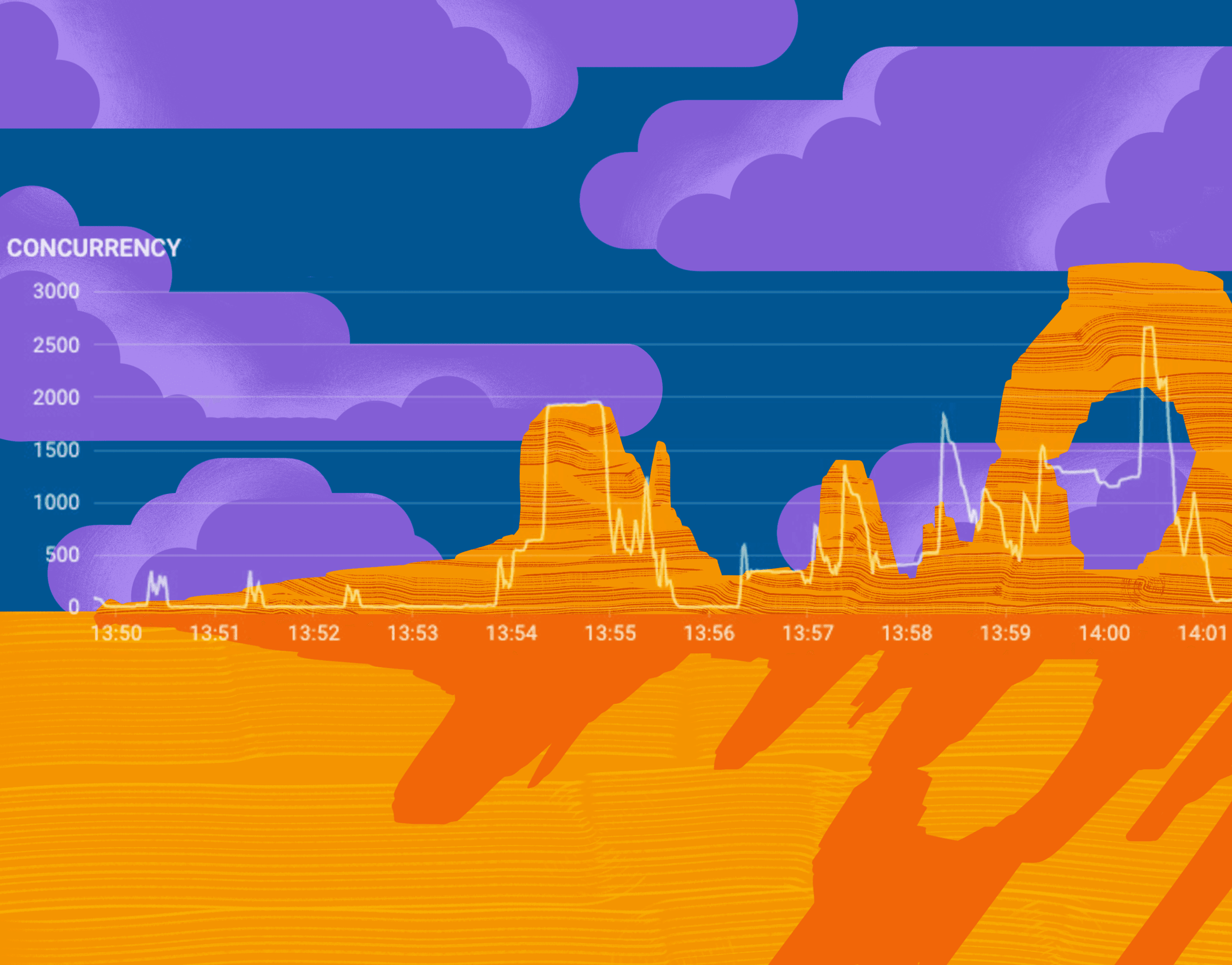
Heatmaps are a beautiful thing. So are charts. Even better is that sometimes, they end up producing unintentional—or intentional, in the case of our happy o11ydays experiment—art.
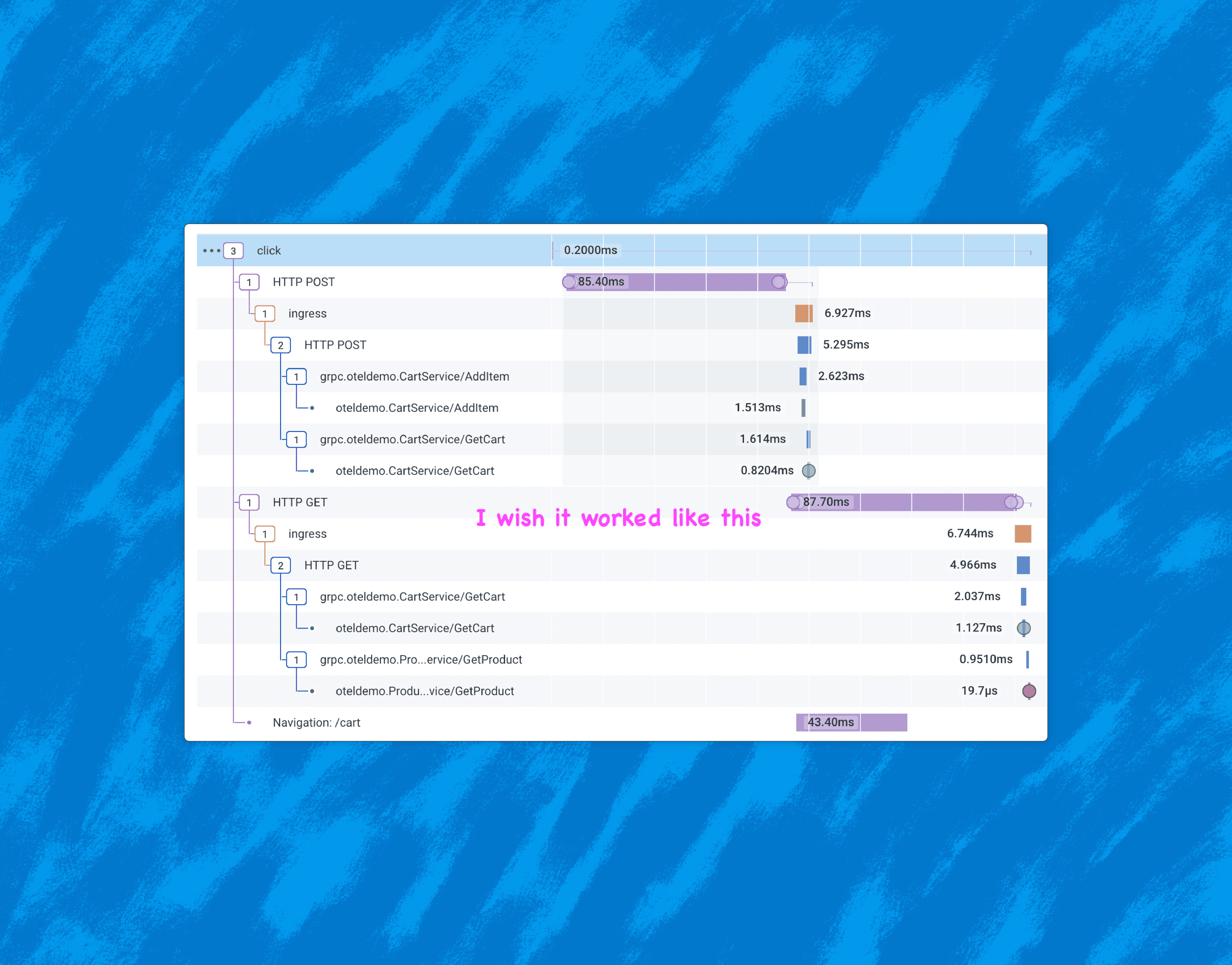
The modern standard for observability in backend systems is: distributed traces with OpenTelemetry, plus dynamic aggregations over these events. This works very well in the world of web servers. But what about the web client?
Dear Miss O11y, I want to make my microservices more observable. Currently, I only have logs. I’ll add metrics soon, but I’m not really sure if there is a set path you follow. Is a guide of some sort, or best practice, like you have to have x kinds of metrics? I just want to know what all possibilities are out there. I am very new to this space.
Get it delivered straight to your inbox.
By subscribing to our newsletter, you agree to Honeycomb’s Terms of Service and Privacy Notice.
Jessica McElroy
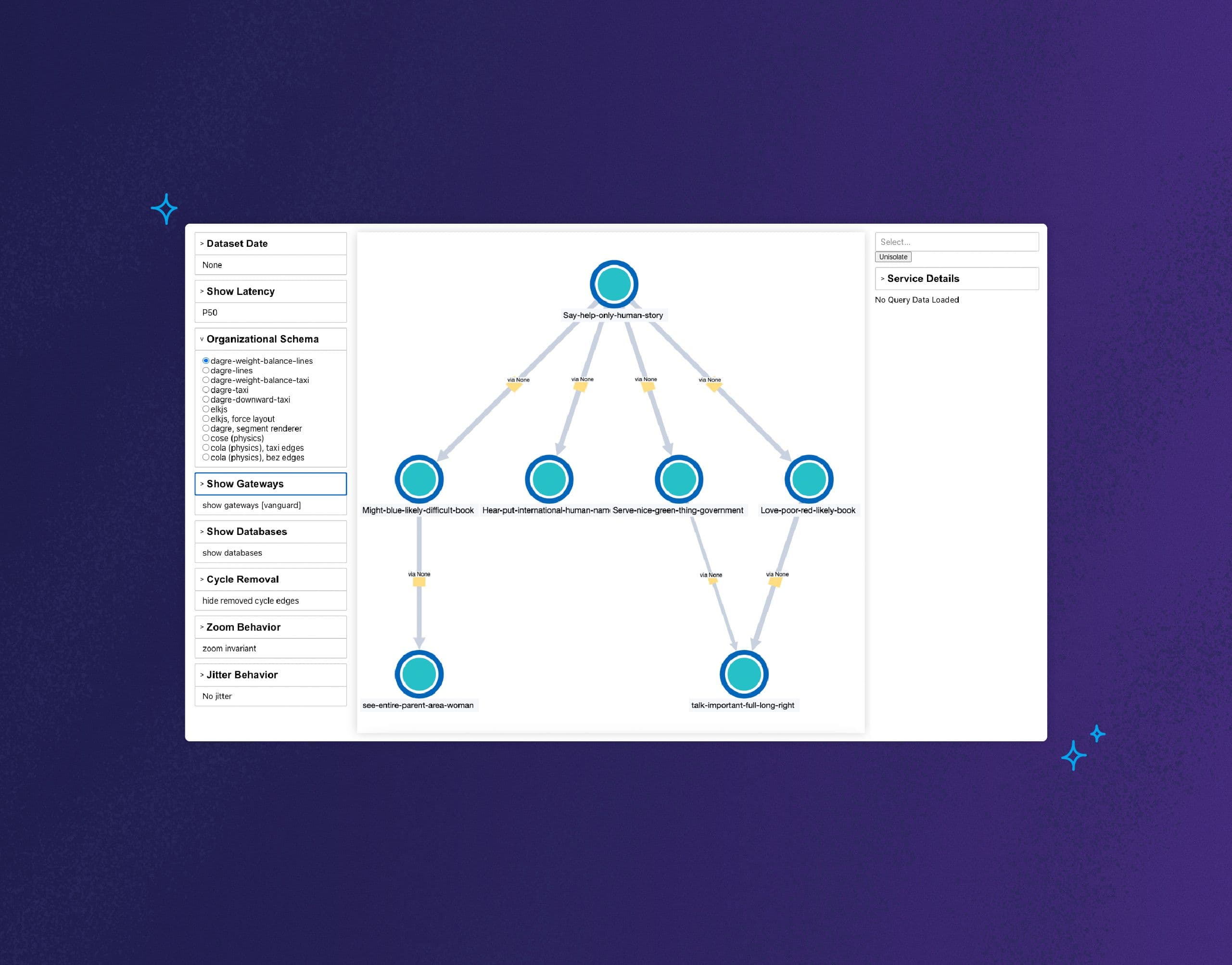
For a long time at Honeycomb, we envisioned using the tracing data you send us to generate a service map. If you’re unfamiliar, a service map is a graph-like visualization of your system architecture that shows all of its components and dependencies. We didn’t want it to be a static service map, though—the kind you’d view once before going “huh, neat”—and then never looking at it again. We wanted to build an actually useful, uniquely Honeycomb-y service map that could become an integral part of your team’s observability workflow.
Nick Travaglini
When an organization signs up for Honeycomb at the Enterprise account level, part of their support package is an assigned Technical Customer Success Manager. As one of these TCSMs, part of my responsibilities is helping a central observability team develop a strategy to help their colleagues learn how to make use of the product. At a minimum, this means making sure that they can log in, that relevant data is available, that they receive training on how to query, and perhaps that they collaborate with the rest of Honeycomb’s CS department to solve problems as they arise.
Michael Wilde
Incidents happen. What matters is how they’re handled. Most organizations have a strategy in place that starts with log searches—and logs/log searching are great, but log searching is also incredibly time consuming. Today, the goal is to get safer software out the door faster, and that means issues need to be discovered and resolved in the most efficient way possible.
Mike Terhar
The best mechanism to combat proliferation of uncontrolled resources is to use Infrastructure as Code (IaC) to create a common set of things that everyone can get comfortable using and referencing. This doesn’t block the ability to create ad hoc resources when desired—it’s about setting baselines that are available when people want answers to questions they’ve asked in the past.
Harrison Calato
George Miranda, Liz Fong-Jones, and Charity Majors, held a series of live discussions called the Authors’ Cut to bring core concepts of the book to life by applying them to real-world use cases. Now that the series is complete, we thought it would be helpful to combine all of the discussion recaps for your viewing pleasure. Each blog post below takes key concepts from chapters in the book and makes them more digestible.
George Miranda
In this post, we’re moving from the foundations of observability to things that become critical when you start practicing observability at scale. Tools like sampling and telemetry pipelines are useful at any size, but when your trickle of observability data suddenly becomes a torrential flood, these tools are essential.
Nick Rycar
As 2022 draws to a close, the Honeycomb team is getting ready to take some time to recharge our collective batteries and get ready for the new year. For some of us, that means spending some well-earned time away from our keyboards. For others, it means we get to spend our computer time doing something just for fun.
In the last few years, the usage of databases that charge by request, query, or insert—rather than by provisioned compute infrastructure (e.g., CPU, RAM, etc.)—has grown significantly. They’re popular for a lot of the same reasons that serverless compute functions are, as the cost will scale with your usage. No one is using your site? No problem: you’re not charged.